Broadcast Production
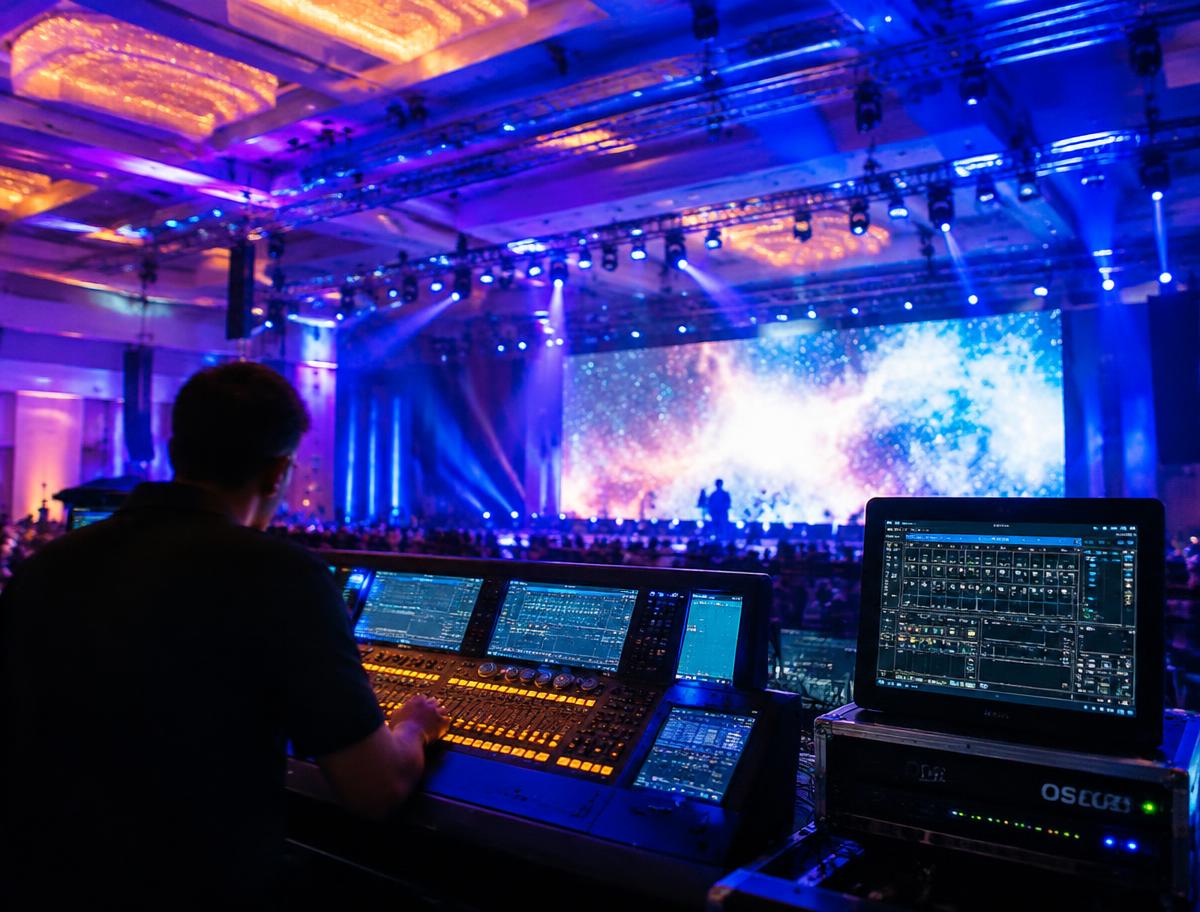
Multi-camera setups, vision mixing, and professional streaming encoders to ensure a high-quality digital feed.
Corporate Events
Geography should never be a barrier to engagement. We build hybrid environments where the remote audience has the same visibility, voice, and value as the people in the physical room.
Illustrative event concept
What
Hybrid and virtual events combine physical presence with digital reach, using professional broadcasting technology to connect a distributed audience.
Why
Choose this format to increase attendance, reduce travel costs, and ensure that remote team members remain fully integrated into company culture.
How
Invest in high-bandwidth connectivity and specialised digital engagement tools rather than traditional physical decor for hybrid events.
Select the right streaming platform and engagement tools based on your security needs and the desired level of interaction.
Conduct thorough technical tests for remote speakers, checking their audio, lighting, and connection stability before the live event.
Direct the live broadcast by switching between physical cameras and digital inputs, ensuring a dynamic experience for both audiences.
When
Allow extra time for platform testing and speaker rehearsals, typically starting eight to twelve weeks before the event to finalise the digital architecture.
Where
Production studios or hotel ballrooms with robust high-speed internet and dedicated space for a technical broadcast gallery.
What is included
Multi-camera setups, vision mixing, and professional streaming encoders to ensure a high-quality digital feed.
Custom web portals or integrated apps that allow remote guests to vote, ask questions, and network in real-time.
Virtual backgrounds, green screen integration, and remote speaker management for a polished, professional look.
Before you decide
A hybrid event is only as strong as its internet connection. Always secure a dedicated, high-speed line with a secondary backup.
Design the programme flow for the remote audience first; if they feel like passive observers, they will disengage quickly.
In picture

Planning guide
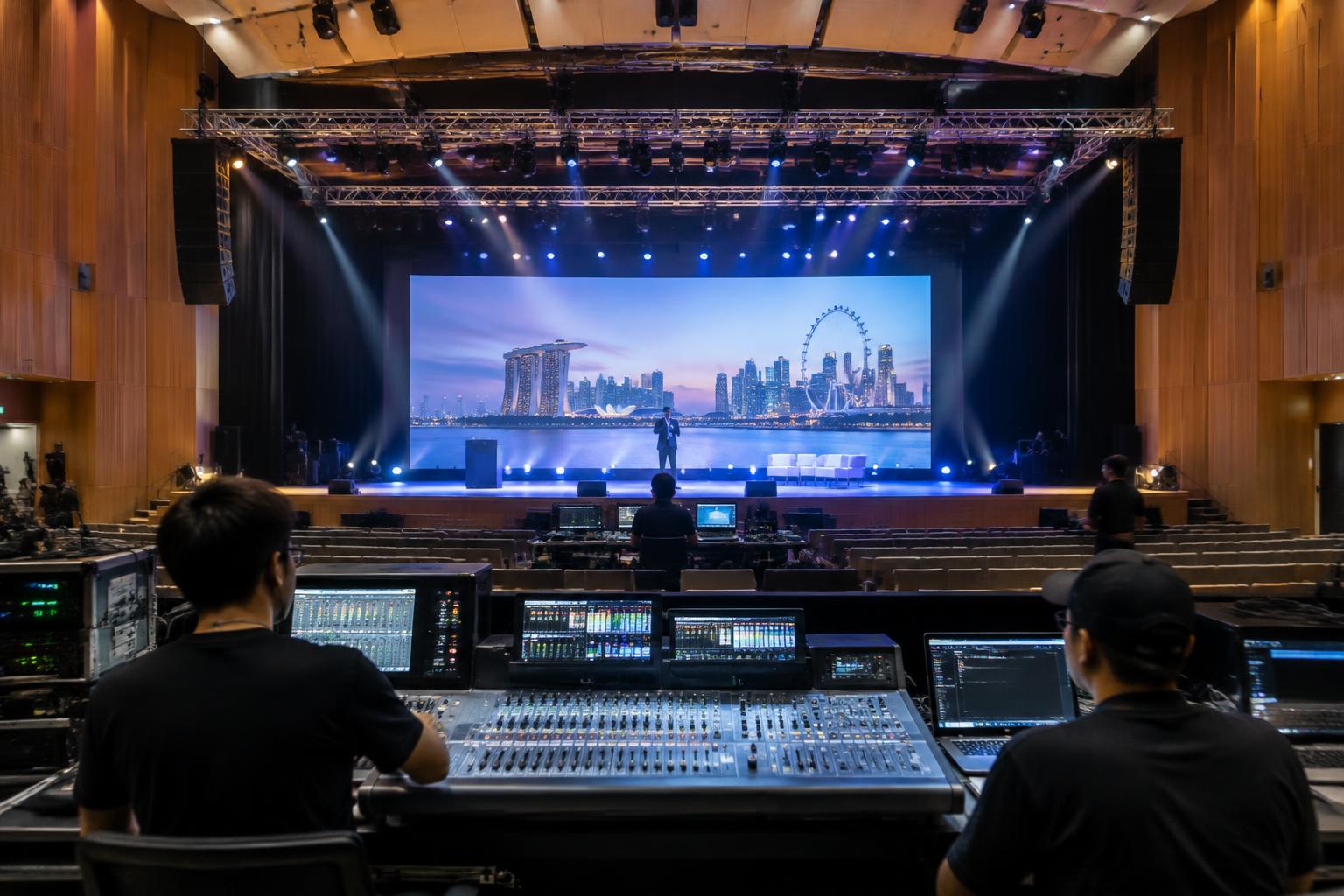
In a hybrid event, the 'room' is no longer defined by four walls. The challenge is to prevent the remote audience from feeling like they are simply watching a video. We focus on participant parity-ensuring that a question from a laptop in London carries the same weight as one from the floor in Singapore. This requires more than just a webcam; it requires a broadcast mindset, professional vision mixing, and a dedicated strategy for digital interaction. We turn the technical complexity of streaming into a bridge for genuine human connection.
Hybrid and virtual events combine physical presence with digital reach, using professional broadcasting technology to connect a distributed audience. Choose this format to increase attendance, reduce travel costs, and ensure that remote team members remain fully integrated into company culture. The brief should identify who is attending, what matters to them and what the occasion needs to achieve. An agreed purpose becomes a useful test for every later decision, from the setting to the programme and the level of production.
Invest in high-bandwidth connectivity and specialised digital engagement tools rather than traditional physical decor for hybrid events. A useful proposal separates the essential scope from optional enhancements. Ask which choices affect the audience experience directly and which mainly change the appearance. Comparing those choices against the same headcount and programme makes costs easier to understand. A smaller budget can call for a more focused format, rather than a scaled-down version of an unsuitable idea.
Share an estimated range even when the final figure has not been approved. Include any fixed requirements, existing venue commitments and items supplied by your own team. This makes it possible to discuss trade-offs openly. Allow for practical needs such as setup time, accessibility, catering requirements and contingency arrangements. The objective is not to fill the budget with more line items, but to put available resources behind the parts of the experience that matter most.
Allow extra time for platform testing and speaker rehearsals, typically starting eight to twelve weeks before the event to finalise the digital architecture. Production studios or hotel ballrooms with robust high-speed internet and dedicated space for a technical broadcast gallery. The shortlist should be assessed against the programme, not appearance alone. Access routes, capacity, noise restrictions, weather exposure and setup windows can influence what is feasible. Check these conditions before committing to a design or announcing details to guests.
Work backwards from the event date with clear decision points for concept approval, supplier confirmation and guest communications. Identify who can approve changes and when information needs to be final. If the schedule is short, simplify the scope deliberately rather than compressing every task. A realistic timeline gives the people involved room to prepare, check details and rehearse the moments that depend on several moving parts.
Select the right streaming platform and engagement tools based on your security needs and the desired level of interaction. Conduct thorough technical tests for remote speakers, checking their audio, lighting, and connection stability before the live event. Direct the live broadcast by switching between physical cameras and digital inputs, ensuring a dynamic experience for both audiences. Keep the responsibilities visible and the running order practical. The plan should explain how the event is set up, how guests are welcomed and how the programme transitions from one moment to the next.
Before requesting a hybrid & virtual corporate events proposal, gather the information you already have: your physical versus digital split, preferred engagement platform, technical requirements for remote speakers, and time zone considerations. Add the decisions still open, the experience you want to create and any constraints that cannot change. After the event, review the agreed measures and the observations that can inform the next brief. No two occasions need the same formula; a clear starting point makes it easier to build something that belongs to yours.
With you, every step
From careful planning and conceptualisation to logistics and on-the-day delivery, EMS supports your event every step of the way - and makes sure everything is carefully executed.
Align the digital versus physical objectives, platform needs, audience locations, and budget.
Design the hybrid guest journey, focusing on engagement tools for remote participants.
Coordinate technical infrastructure, high-speed connectivity, and multi-camera production.
Manage full-scale technical rehearsals for both on-site and remote speakers.
Review digital engagement analytics and provide high-quality recordings for post-event use.
No two businesses have the same story. Your audience, objectives and brand shape the concept, programme and atmosphere. No two events should be the same.
Customised does not have to mean extravagant. We build solutions for every business and budget, prioritising the elements that serve your goals and making the trade-offs clear.
A brand activation needs a different approach from a conference or a retreat. We bring focused event expertise to each format, connecting the creative idea with the details needed to deliver it.
FAQs
We use real-time polling, dedicated remote moderators, and exclusive 'digital-only' content to keep online guests active and involved.
We always deploy redundant internet connections and have local recording backups to ensure content is never lost.
Yes, we provide low-latency return feeds so remote speakers can see the audience and interact with live panellists seamlessly.
Keep exploring
Free, tailored proposal
Share your brief once. We will come back with a considered proposal shaped around your audience, objectives and budget.
Online quote requests are not available yet. Please use the listed contact details.